Why the Industry Is Afraid of a Realistic Boxing Video Game
An investigative look at myths, missing data, and the quiet punishment of boxing fans
For more than a decade, publishers, developers, and investors have repeated the same line whenever the subject of a true simulation boxing video game comes up:
“Realism doesn’t sell.”
It’s said with confidence. It’s said as if it’s settled science. And yet, when you look closely, there is no hard evidence to support it. No controlled release. No modern, fully realized sim boxing title existed that has been allowed to succeed or fail on its own terms. Just assumptions, risk aversion, and a long history of misunderstanding boxing fans.
This article isn’t a rant. It’s an examination of why the fear exists, why the excuses don’t hold up, and why the industry keeps talking about data it doesn’t actually have.
1. The Licensing Myth: A Convenient Smokescreen
Licensing is always the first excuse raised.
“Boxing is too hard to license.”
“Too many promoters.”
“Too many individual contracts.”
But licensing has never been the real obstacle.
Indie studios license boxers.
Mobile games license boxers.
Past boxing games licensed boxers under far worse market conditions.
And modern sports games routinely handle fragmented rights across leagues, unions, and individuals.
Licensing is a cost problem, not a design problem, and cost has never stopped companies from chasing profit when they believe the market exists.
When publishers lean on licensing as the reason, what they’re really saying is:
“We don’t want to invest unless success is guaranteed.”
That’s not a boxing problem. That’s a risk tolerance problem.
2. The Steel City Interactive Paradox
Here’s where the narrative really starts to crack.
An indie studio, Steel City Interactive, managed to sell more units with Undisputed than Electronic Arts did with any single Knockout Kings or Fight Night entry.
That fact alone destroys several industry talking points:
“Only AAA marketing can sell boxing.”
“Boxing fans are too small a market.”
“There isn’t enough interest anymore.”
And yet, instead of asking why that happened, many companies quietly rewrote the story.
They claimed:
Fans were “starved.”
Any boxing game would have sold
The sales had nothing to do with realism
But if starvation alone explains the success, why did Undisputed’s sales drop sharply within weeks?
If people were just desperate, the curve would have flattened, not collapsed.
What actually happened is far more telling.
3. The First-Look Effect: What Fans Really Bought
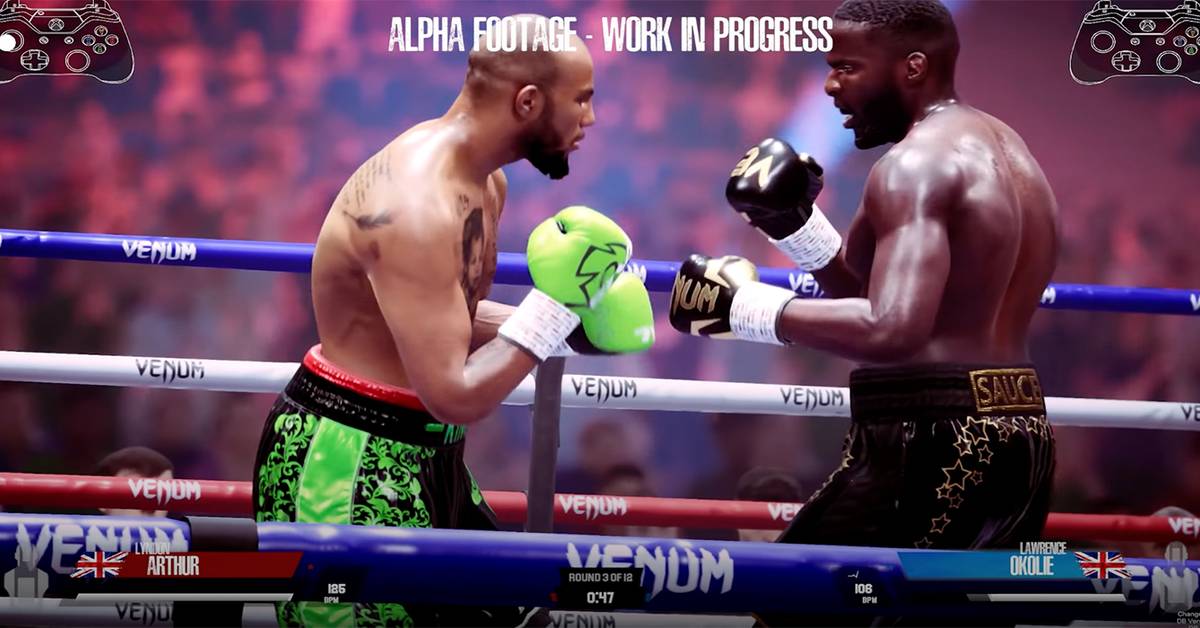
When the ESBC Official Alpha Gameplay Features (First Look) video dropped on YouTube, the response was immediate and measurable:
High engagement
Strong positive sentiment
Widespread sharing among boxing fans
Praise for footwork, pacing, animations, and presentation
Fans didn’t respond to menus.
They didn’t respond to licensed names.
They responded to how the boxing looked and felt.
That first-look footage sold a promise:
A boxing game that respected boxing.
When later builds drifted away from that promise, mechanically and philosophically, interest followed the same downward trajectory.
This is crucial:
The initial sales spike was driven by realism signaling.
The drop-off came when the experience stopped matching the signal.
That’s not a failure of realism.
That’s a failure to commit to it.
4. “Realism Doesn’t Sell,” Where Is the Data?
This is the most important question, and the one the industry never answers.
Where is the data showing that a realistic boxing sim fails?
There has been no modern sim-first boxing release.
No title with deep fatigue modeling, style-specific defense, ring IQ systems, and boxer individuality.
No boxing equivalent of iRacing, Football Manager, or Gran Turismo.
Instead, companies point to:
Arcade-hybrid games
Design compromises
Systems flattened for “balance.”
And then use those outcomes as proof that realism doesn’t work.
That’s not data.
That’s circular reasoning.
You cannot prove realism doesn’t sell by never actually selling realism.
5. The Real Fear: Complexity, Not Sales
What companies are actually afraid of isn’t the market.
They’re afraid of:
Systems depth that’s hard to QA
AI that can’t be faked with rubber-banding
Mechanics that expose bad design
Hardcore fans who notice shortcuts
Balancing realism without dumbing it down
Supporting offline simulation instead of monetized online loops
A real boxing sim is hard.
It demands:
Boxer-specific mechanics
Style asymmetry(imbalance)
Fatigue that changes decision-making
Defense that requires knowledge, not reactions
Long-term AI simulation integrity
That’s expensive, not just to build, but to maintain. And that’s where investor fear comes in.
6. Punishing Boxing Fans for Being Boxing Fans
By framing realism as “non-viable,” the industry does something quietly hostile:
It blames boxing fans for wanting boxing.
Fans aren’t asking for niche obscurity.
They’re asking for:
Options
Depth
Authenticity
Control over realism settings
The same industry that celebrates ultra-deep sims in racing, football management, and flight simulation suddenly pretends boxing fans are unreasonable for wanting the same respect.
That isn’t market logic.
That’s selective condescension.
7. The Truth No One Wants to Say Out Loud
Here’s the uncomfortable reality:
A realistic boxing game would expose how shallow most sports game systems are.
It would demand new AI approaches.
It would attract scrutiny from people who understand the sport.
And it wouldn’t be easily monetized through shortcuts.
That’s why companies keep saying “it wouldn’t sell” instead of admitting:
“We’re not structured to build it properly.”
The Evidence Already Exists
The evidence is not hypothetical.
The first-look gameplay response proved that realism attracts attention.
Early sales proved that boxing fans will show up.
The drop-off proved that betraying realism loses them.
The absence of a true sim proves nothing, except fear.
Until a publisher funds and releases a fully committed boxing simulation, no one gets to claim the market doesn’t exist.
Because right now, the industry isn’t following data.
It’s hiding from it.


No comments:
Post a Comment